Clinical Science Lead & Validation Specialist · Open to employed and consulting roles

Measuring how people perform under real-world pressure.

I work at the intersection of clinical reality, human factors, and data. Two ways: human-factors and performance consulting in high-stakes settings like surgery, elite sport, and defence, and hands-on analysis of the physiological and wearable data those settings produce.

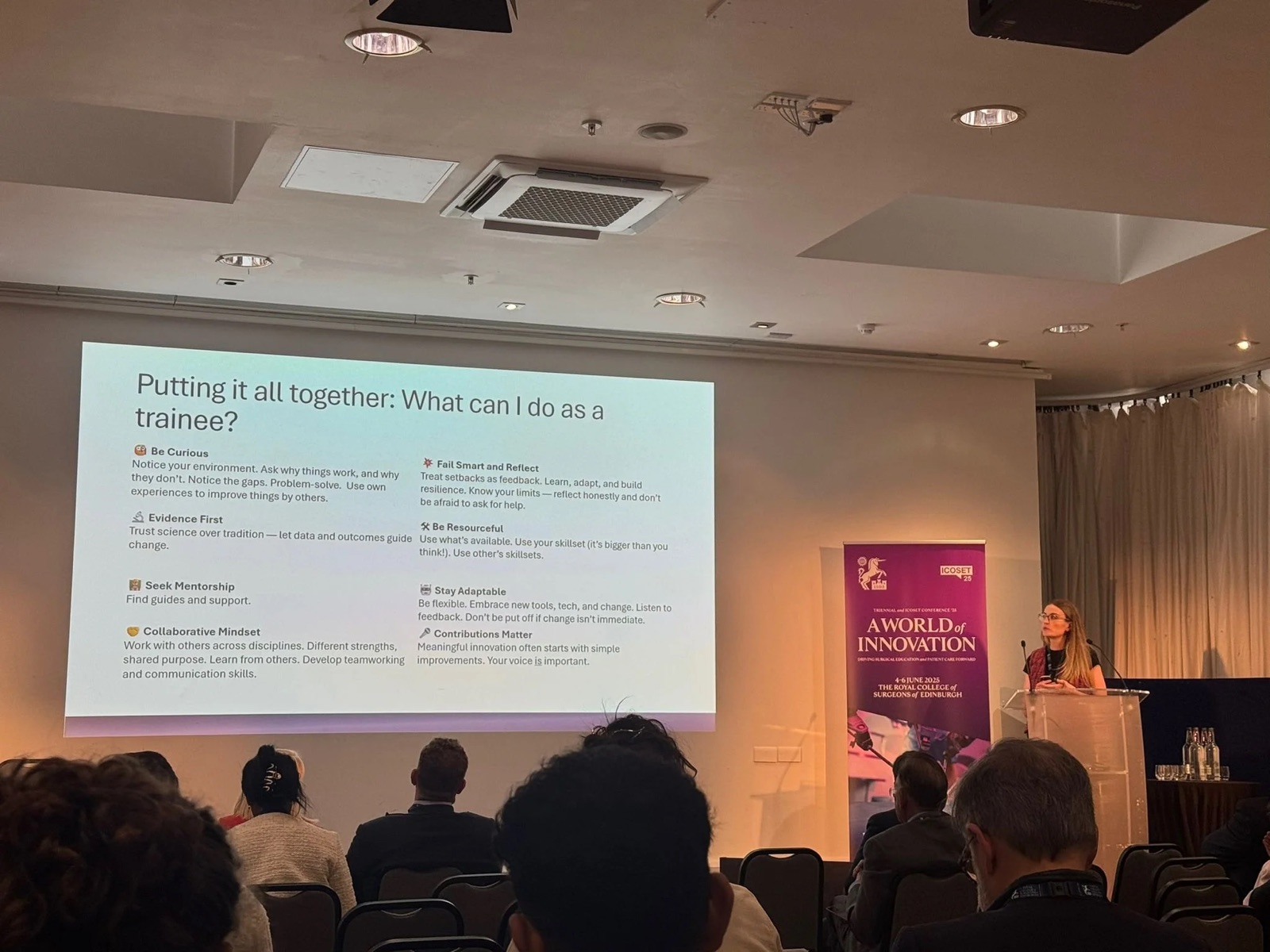
Emma Howie speaking at a conference
Why this exists

An accurate signal can still lead to the wrong decision.

How people perform under pressure is hard to measure well. A number can look precise and still be measuring the wrong thing, or be read the wrong way in the moment that matters. Most measurement is built in the laboratory and never tested where the work actually happens. That gap, between a clean signal and a sound decision, is where I work.

What I do

Two ways I work.

01

Human factors and performance

Measuring and improving how people perform under pressure, and the physical and cognitive demands the work places on them: cognitive load, fatigue, posture and strain, and team performance. The same human-factors and ergonomics approach I use in the operating theatre, applied across elite sport, defence, and frontline medicine.

  • Cognitive ergonomics: cognitive load, mental workload, and fatigue measurement
  • Physical ergonomics: posture, movement, and musculoskeletal strain
  • Team performance and human-factors field studies
  • Clinical advisory and translation between clinical, technical, and commercial teams
More on consulting
02

Data analysis

Hands-on analysis of the physiological and wearable data those settings produce. I build the pipeline, engineer and check the features, and run the statistics that tell you whether a number is real before you build on it.

  • Signal processing and feature engineering
  • Statistical analysis and modelling
  • Measurement quality: error, reliability, and agreement
Approach

How I work.

01

Real environments, not laboratories

I've worked in the settings where your product will actually be used. The gap between lab performance and real-world performance is where products fail. It's also where mine succeed.

02

Measures that survive scrutiny

Whatever a number claims to measure, I trace it back to the evidence. What is the physiological signal, against what reference, in what population, under what real task demand? These are the questions that decide whether a measure means anything. I help answer them before decisions are built on it.

03

Working across clinical, technical, and human factors

I work across all three layers: signal-processing pipelines, underlying physiology, and clinical workflow fit. Most consultancies hold one. Products usually fail in the gaps between them.

About

I’m a clinician-researcher working at the intersection of clinical reality, technology, and human factors.

I’ve been a Clinician for 12 years, with additional expertise in data science and human factors. Through my doctoral work, I’ve spent the last few years measuring cognitive load and team performance inside live operating theatres and other fields using wearable technology, work that asks a deceptively hard question: what does stress, workload, and team coordination actually look like in real working environments, not laboratories? My practice grew out of that research. The same question runs through all of it: when a product or a team claims to measure human state, stress, recovery, cognitive load, attention, performance, does the measure hold up, and does it lead to a better decision? The work has crossed surgery, elite sport, military human performance, mental health, and academia, often sitting in a room with surgeons, nurses, anaesthetists, sports scientists, psychologists, defence researchers, and HealthTech founders, and translating cleanly between them.

Most of my current validation and evidence-strategy work is delivered through Metriqx ↗, an evidence-led advisory practice for health and performance technology: see the case studies and methodology there ↗. It is kept deliberately separate from the consulting and analysis here: for any one client I take one role, never both.

Contact

Let’s work together.

If you’re working on human performance, human factors, or the data behind them, let’s talk.

This opens a pre-filled draft in your email app. Nothing is sent until you press send.